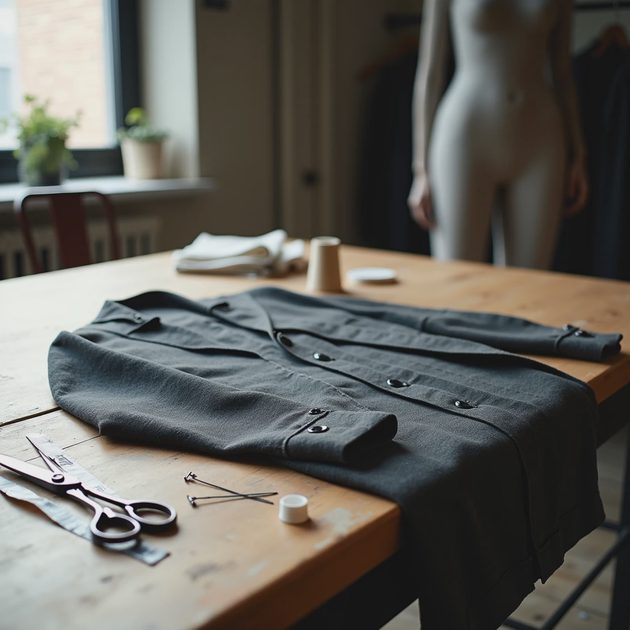
I used to believe that any flaw in a vintage garment could be fixed. Too long? Hem it. Too loose? Take it in. Shoulders a little wide? A good tailor can work miracles. I treated tailoring like magic — a spell you could cast on any beautiful thing to make it belong to your body. This belief was expensive, and it was wrong.
What I've learned, over years of standing in fitting rooms with armfuls of almost-perfect dresses and jackets and skirts, is that tailoring is not magic. It's a tool. And like any tool, it works brilliantly on the right problems and fails completely on the wrong ones. The skill is in knowing the difference before you hand over your credit card — first to the thrift shop, and then to the tailor.
Here is the framework I use now. It has saved me money, closet space, and the quiet disappointment of picking up an altered garment that still doesn't feel right.
The Shoulder Rule: If the Shoulders Don't Fit, Nothing Else Matters
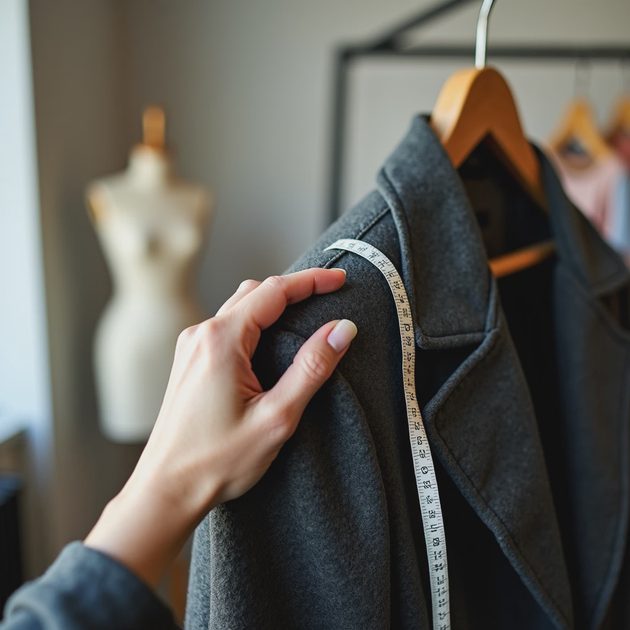
I've said it before in other essays, and I will keep saying it until every vintage-loving woman I know has it memorized: shoulders don't forgive. A waist can be taken in or let out. A hem can be raised or lowered. Sleeves can be shortened or lengthened. But the shoulder seam of a garment is structural — it sits at the intersection of the body's movement and the garment's architecture — and altering it is expensive, difficult, and frequently unsuccessful.
A shoulder that's too narrow cannot be meaningfully widened. There might be a tiny seam allowance inside — a quarter inch, maybe a half inch if you're lucky — but most vintage garments were cut close to the seam line. Letting a shoulder out beyond its original allowance weakens the seam and changes the angle of the sleeve. You might gain a little room. You will not gain a comfortable fit.
A shoulder that's too wide is technically alterable, but the process involves removing the sleeves, reshaping the armhole, recutting the shoulder line, and reattaching the sleeves to a new opening. It's not a simple alteration. It's a reconstruction, and it's priced accordingly. I once asked my tailor — a patient, soft-spoken man in Greenpoint who has saved many of my favorite pieces — what he'd charge to narrow the shoulders on a 1940s jacket I'd fallen in love with. He looked at the jacket, looked at me, and said, very gently, "For that price, you could buy a jacket that fits." I put the jacket back on the rack.
The rule: if the shoulder seam sits within a quarter inch of your actual shoulder edge, the piece is alterable. If it's off by more than that, in either direction, leave it behind. No matter how beautiful the fabric. No matter how good the price. A garment that doesn't fit your shoulders will hang in your closet, worn once and regretted, until you finally donate it to someone whose shoulders it actually matches.
The Waist and Hip Math: What Can Be Taken In, What Can Be Let Out
Waist alterations are the most common and most forgiving tailoring work. Taking in a waist — making it smaller — is straightforward on most garments. Letting a waist out — making it larger — depends entirely on the seam allowance inside.
Before I buy a vintage skirt or pair of trousers that's slightly too snug at the waist, I turn it inside out and check the seam allowance. I'm looking for at least half an inch of extra fabric beyond the current seam line. Three-quarters of an inch is better. A full inch is a gift from the sewing gods. If the seam allowance has already been trimmed close — less than a quarter inch — the waist cannot be let out, period. You can confirm this by running your finger along the inside seam and feeling for the raw edge. If it's close to the stitching, do not buy the garment in the hope that it will magically expand.
Hips are more complicated. Taking in the hip of a skirt or trousers — making it narrower through the fullest part — is possible but changes the silhouette. A 1950s A-line skirt taken in through the hips will lose some of its swing. A pair of wide-leg trousers narrowed at the hip will hang differently. The alteration is structurally possible, but ask yourself whether the silhouette you're creating is still the silhouette you fell in love with.
Letting out the hip is like letting out the waist — it depends on seam allowance. Most vintage garments were not cut with generous hip allowance. If the hip is tight and the seams are narrow, the piece cannot grow with you.
The rule: waist alterations are usually worth it if the seam allowance exists and the garment is otherwise perfect. Hip alterations are riskier — they change the line of the garment, and the result might not be what you imagined. If the hip doesn't fit as-is, be honest with yourself about whether you love the piece enough to accept how it will look altered.
The Hem Test: What's Possible, What's a Problem
Hemming is the easiest alteration, and I've done it to dozens of vintage pieces. Raising a hem — making a skirt or dress shorter — is simple, affordable, and reversible if you keep the original fabric. Lowering a hem — making it longer — depends entirely on the hem allowance, which is the folded-up fabric at the bottom of the garment.
Before buying a dress or skirt that's too short, I check the hem allowance by unfolding it slightly. A generous hem allowance — two inches or more — means the garment can be lengthened. A narrow hem — under half an inch — means the garment is at its maximum length. There is no fabric to release. The skirt is as long as it will ever be.
I also check the condition of the hem fold. On older pieces, the fabric inside the hem may be lighter or less faded than the rest of the garment, because it's been protected from light and washing. If you let the hem down, you may see a visible line where the old hem crease was, and a color difference between the exposed fabric and the newly released fabric. Sometimes this reads as character. Sometimes it reads as damage. It depends on the piece, the fabric, and your tolerance for visible history.
A third hem consideration: original proportions. A 1950s full skirt that's been shortened too aggressively loses its balance. The silhouette was designed with a specific length in mind, and altering it by more than an inch or two can throw off the relationship between the waist, the hip, and the hem. If you're looking at a vintage piece that's already been hemmed and it looks off, trust your eye. You can't un-alter a bad alteration without adding fabric back, and fabric doesn't grow back.
The rule: hems are the safest alteration, but check the allowance before you assume a piece can be lengthened. And if the proportion already looks wrong on the hanger, it won't look better on your body.
The Fabric Integrity Question: Is the Garment Healthy Enough to Alter?
Tailoring stresses fabric. Every needle puncture, every seam ripped and resewn, every press of the iron puts strain on the fibers. A vintage garment that's fragile — silk that's begun to shatter, wool that's thin at the stress points, cotton that's dry-rotted — may not survive the alteration process. The tailor will start working on it, and the fabric will tear, or fray, or simply disintegrate under the machine.
Before I decide to alter a vintage piece, I do a fabric health check. I gently pull the fabric along the seams — not hard, just enough to see if the threads hold. I hold the fabric up to the light and look for thin spots, especially at the elbows, the shoulders, the waistline, and anywhere the garment bends. I run my thumb along the inside seams and check for fraying, which is fabric's quiet way of saying it's tired.
Certain fabrics are inherently more alterable than others. Wool gabardine is tough and forgiving — it can be taken in, let out, hemmed, and pressed without complaint. Silk crepe de chine is delicate but stable. Rayon challis is soft and movable but frays easily. Taffeta, organza, and any crisp, structured silk will show needle holes from previous seams if you try to move a seam line. Once those holes are there, they're permanent. You can't erase them with pressing.
The rule: if the fabric feels fragile, unstable, or thin in your hands, do not buy it with a plan to alter it. The garment needs to survive the alteration before it can survive your life.
The Emotional Math: Cost, Value, and the Tailoring Bill You're Willing to Pay
Here is the part that has nothing to do with seams and everything to do with honesty. Tailoring costs money. Sometimes a lot of money. A simple hem might cost twenty dollars. Taking in a waist might cost thirty. Replacing a zipper might cost fifty. Resetting sleeves, reshaping shoulders, rebuilding a lining — these are triple-digit alterations, and they add up fast.
I've developed a simple mental formula that helps me decide whether a vintage piece is worth the tailoring investment:
Cost of the garment + cost of alterations = total investment. Then ask: would I buy this piece, already altered, for the total price?
If a vintage dress costs forty dollars and needs sixty dollars of alterations, the total is one hundred dollars. Would I walk into a shop, see this exact dress hanging on a rack with a one-hundred-dollar price tag, and feel excited to buy it? If the answer is yes, the alterations are worth it. If the answer is no — if I'd walk past it at that price — then I'm not buying a dress. I'm buying a project I'm not genuinely committed to.
This formula has saved me from some of my most expensive mistakes. I once almost bought a beautiful 1940s wool suit that needed the skirt waist let out, the jacket sleeves shortened, and the lining repaired. The suit was sixty dollars. The alterations would have been over a hundred. For one hundred and sixty dollars, I could buy a vintage suit that fit me with no work required. I left the suit behind, and I've never regretted it.
The emotional math matters too. A piece you love so much that the cost feels irrelevant — a piece that makes your heart beat faster, that you can already imagine wearing to a dozen occasions — is probably worth the investment. A piece you're indifferent about, that you're only considering because the price is low, will not become a favorite just because you spent money altering it. Tailoring doesn't change how you feel about a garment. It only changes how it fits.
A Quick Field Guide: What's Fixable and What's Not
Before I leave the thrift shop, I run through a quick mental checklist. It's not exhaustive, but it covers the most common issues I encounter.
Usually fixable (worth considering):
Hems too long or too short (with adequate allowance)
Waist slightly too loose (taking in)
Waist slightly too snug (with seam allowance)
Sleeve length too long (shortening from the cuff)
Loose buttons, missing hooks, small seam gaps
Outdated shoulder pads that can be removed
Sometimes fixable (proceed with caution):
Waist too snug without seam allowance (requires added fabric or creative reconstruction)
Zipper replacement (cost varies widely)
Lining repairs or partial replacement
Sleeves slightly too tight (depends on seam allowance and fabric)
Small moth holes in discreet locations
Rarely fixable (leave behind):
Shoulders too wide or too narrow (structural, expensive, often unsuccessful)
Armholes too tight or too loose (difficult to reshape)
Fabric shattering, dry rot, or widespread thinning
Broken or missing buttons that cannot be matched
Zippers on garments where the zipper is integral to the design (replacing changes the look)
Pieces where the alterations cost more than the garment is worth to you
Tailoring is a gift. It's the thing that turns a vintage piece from "almost mine" into "mine." But it's not a rescue mission. A garment that needs too much work — that requires you to rebuild its shoulders, or recut its hips, or replace its entire lining — is not a project. It's a sign that the piece belongs to someone else, someone whose body matches its measurements without intervention.
The best vintage pieces I own are the ones that fit me well enough from the start — close in the shoulders, forgiving at the waist, right in the length or just slightly too long. The tailoring I've done on them has been minor, a refinement rather than a reconstruction. Those are the pieces I reach for, year after year, because they feel like they were made for me. And in a way, after the tailor's careful work, they were.
Style should feel collected, not crowded. Part of collecting wisely is knowing what to bring home, what to alter, and what to leave on the rack for the next woman — the one whose shoulders it will fit perfectly, with no alterations at all.
No letters yet — be the first to write.