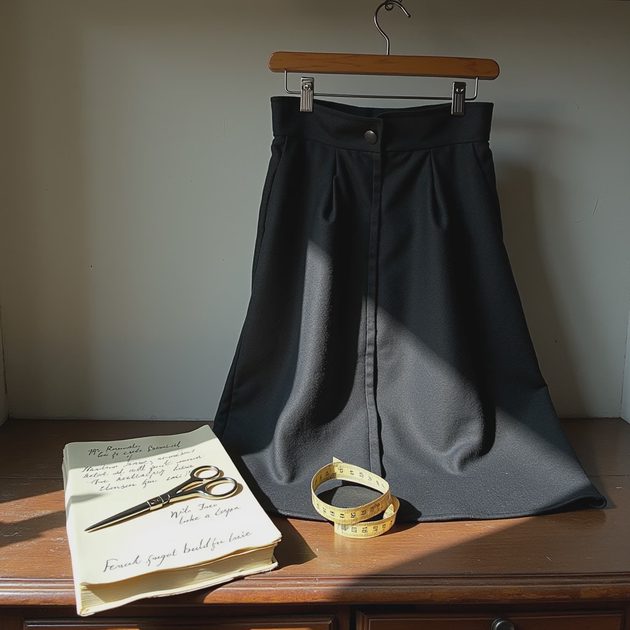
Thrift shops are overwhelming by design. Too many racks, too many colors, too many decades jumbled together with no organizing principle except sometimes, if you're lucky, a vague separation by garment type. Finding a well-made vintage skirt in that environment requires more than patience. It requires a fast, reliable set of visual and tactile cues — things you can check in under a minute without taking the skirt off the hanger.
I've developed a sixty-second sequence. It's not exhaustive — you'll still want to try the skirt on before you buy it — but it filters out the poorly made, the damaged, and the disappointing before you waste time in the fitting room. Here it is, step by step.
Second 1–10: The Fabric Handshake
The first thing I do is touch the fabric. Not a gentle, hesitant brush — a proper handshake. I take a handful of the skirt fabric, squeeze it gently, and release it. I'm checking for three things simultaneously.
Recovery.
Does the fabric bounce back, or does it hold the wrinkles from my hand? Wool gabardine recovers. Quality cotton twill recovers. Rayon crepe and silk charmeuse will hold some creasing, but the creases should be soft, not sharp — a sign of natural fiber behavior, not damage. Polyester from the 1970s often holds creases stubbornly, which tells you it will look wrinkled within an hour of sitting down.
Hand feel.
Is the fabric smooth, fluid, substantial? Or is it scratchy, stiff, or weirdly slick? A slick, glassy hand feel often signals cheap synthetic satin. A stiff, papery feel in what's supposed to be wool indicates the fibers have dried out from poor storage or aggressive cleaning.
Weight.
A well-made skirt has fabric weight appropriate to its design. An A-line skirt in wool should have enough body to hold its shape without a petticoat. A bias-cut skirt in silk should have enough drape to move like water. Too light, and the skirt will hang limp and show every lump and seam of whatever you're wearing underneath. Too heavy, and the skirt will pull at the waistband and feel like you're wearing upholstery.
Ten seconds in, I already know whether I want to keep looking.
Second 11–25: The Seam and Seam Finish
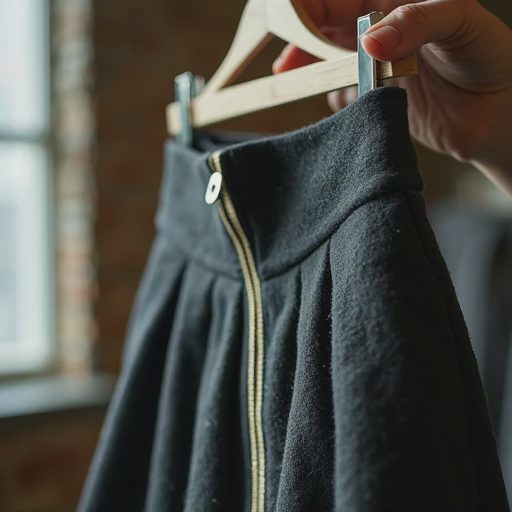
Now I turn the skirt — partially, on the hanger — and look inside at the seams. Not all of them. I check the side seam and the center back seam, because those are the ones that take the most stress.
A well-made vintage skirt has finished seams. On skirts from the 1940s and 1950s, you'll often find bound seams — the raw edge wrapped in a strip of fabric or tape, neatly stitched down. On skirts from the 1960s and 1970s, you'll see serged or overlocked seams more frequently, but the stitching should be even, dense, and secure. Loose loops, gaps in the stitching, or areas where the thread has clearly snapped and been tied off are signs of poor construction or previous damage.
A raw, unfinished seam — cut fabric edges with no binding, no serging, nothing — is the loudest signal of a cheaply made garment. The fashion industry term for this is "cut and sew," and it means the manufacturer prioritized speed over durability. If the inside of the skirt already looks chaotic, the outside won't hold up to regular wear. Leave it on the rack.
Second 26–40: The Hem Weight and Construction
The hem is one of the most revealing parts of a vintage skirt, and it takes only a few seconds to check. I lift the hem slightly — just enough to see the fold — and I'm looking for depth, weight, and finish.
A well-made skirt has a deep hem. Two inches is generous. Three inches is luxurious. That depth adds weight to the bottom of the skirt, which helps it hang correctly and swing gracefully when you walk. It also tells you the maker invested fabric in places that aren't immediately visible — a small but real sign of quality values.
I also check how the hem is finished. A neatly slip-stitched hem, where the stitches are nearly invisible from the outside, is a mark of careful handwork or skilled machine work. A hem that's been glued or fused with iron-on tape — you'll feel the stiffness — is a shortcut that will eventually peel, pucker, or separate. Glue doesn't last. Stitches do.
A weighted hem — where a small chain or tape weight is sewn inside the hem fold — is a particularly lovely vintage detail you'll find in higher-end pieces from the 1940s and 1950s. It's not common, but when you find it, you know you're holding a skirt that was built with serious intention.
Second 41–55: The Waistband Interior
The waistband is where a skirt interfaces most directly with your body. It takes sweat, friction, and the stress of every sit, stand, bend, and reach. A well-made waistband is built to handle this. A cheap one shows its weakness immediately.
I fold the waistband outward slightly and check the interior. A quality waistband has a cleanly finished inner edge — bound, folded under, or faced — rather than a raw edge hidden by a flimsy strip of grosgrain that's already peeling away. The facing or binding should lie flat, with no puckered stitching pulling at the fabric.
I also check that the waistband is interfaced — that there's a layer of fabric inside giving it structure and preventing it from rolling or folding during wear. You can feel this by pinching the waistband between your thumb and forefinger. If it's limp, thin, and crumples easily, it will roll over within an hour of wearing it. If it's firm but flexible, with a slight spring, it's been properly constructed.
If the skirt has a side zipper, I check where the zipper meets the waistband. This junction bears a lot of tension, especially when you're sitting. Look for loose stitches, fabric pulling away from the zipper tape, or small tears forming at the seam. These are stress signals. They'll get worse.
Second 56–60: The Overall Silhouette Test
For the last five seconds, I step back and hold the skirt at arm's length on the hanger. I'm looking at the silhouette — not on my body yet, just the garment's own shape.
A well-made skirt holds its intended shape on the hanger. An A-line skirt should flare gently from the waist. A pencil skirt should narrow cleanly without looking twisted or pulled. A bias-cut skirt should fall into soft, rippling folds, not hang stiffly or bunch at the seams. If the skirt already looks misshapen or lifeless on the hanger — if the seams twist sideways, if one side hangs longer than the other, if the fabric pulls in strange directions — the problem is in the construction, not the display. A good steam might revive it, but more likely, the garment has been cut off-grain or assembled poorly, and no amount of pressing will fix it.
One last glance at the overall proportions: does the skirt flare, taper, or fall in a way that makes visual sense? Not to any particular decade's ideal, but to your eye. Trust what you see. If the silhouette looks off-balance, it is off-balance. Move on.
Sixty seconds. That's all the time it takes to separate a well-made vintage skirt from one that's already falling apart. You won't catch everything — a hidden split seam or a subtle fabric weakness might reveal itself only in the fitting room or after a wash — but you'll catch enough. The goal isn't perfection. It's to stop talking yourself into skirts that don't deserve you, and to start recognizing the ones that do.
No letters yet — be the first to write.