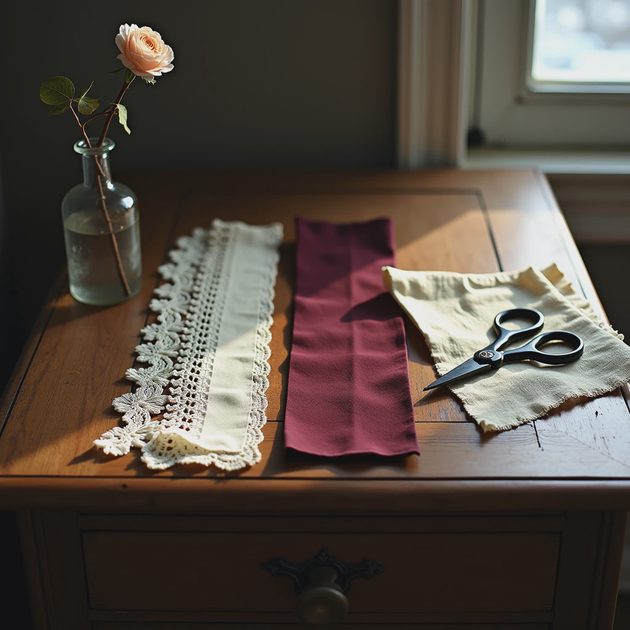
The most dangerous section of any vintage shop is the one that makes you feel something before you've even touched the fabric. Lace collars. Tulle skirts. Velvet opera coats. Satin slips in shades of rose and champagne. These pieces whisper romance from across the room, and if you're anything like me, you've picked up more than one of them with your heart already beating faster than your judgment.
I have made this mistake. I have brought home a Victorian-style lace blouse that made me look like I was auditioning for a period drama. I have purchased a full tulle skirt that I wore exactly once — to a birthday party where someone asked if I was dressed as a ballerina. I have stood in thrift shop fitting rooms, surrounded by beautiful, unwearable things, trying to convince myself that "romantic" and "costume" were the same word.
They are not. And learning the difference is what turned me from a collector of pretty mistakes into someone who can thrift for genuine romance — the kind that softens an outfit without turning it into a performance.
Start With Fabric, Not Fantasy
The first mistake most romantic vintage hunters make is shopping with a fantasy in their head instead of fabric knowledge in their hands. We picture Heathcliff on the moors, or a Parisian heroine in the rain, or a pre-Raphaelite painting come to life — and then we grab whatever lace, velvet, or silk seems to match the image, without asking whether the fabric itself is beautiful or just the idea of it.
Here is my rule now: touch before you dream. Let the fabric tell you what it is before you tell yourself what it could be.
The fabrics that carry genuine romance without tipping into costume are almost always the ones with movement. Silk crepe de chine that pools and flows. Fine cotton voile with a slight transparency that softens without revealing. Rayon challis from the 1940s with a matte finish and a drape that follows your body rather than standing away from it. Lightweight merino wool that holds warmth without bulk. These fabrics move with a woman. They respond to her body, her walk, her breath. A costume fabric — stiff tulle, scratchy lace, cheap satin with a high synthetic sheen — stands apart from the body. It doesn't move with you. It moves around you.
In the thrift shop, I run my thumb over the fabric slowly and ask two questions. Does it feel good against my skin, not just in my imagination? And does it drape or does it hold its own shape? Romance lives in drape. Costume lives in structure that has nothing to do with the body wearing it.
What to reach for: silk crepe, rayon challis, fine cotton lawn, lightweight wool jersey, washed charmeuse, soft georgette, matte crepe.
What to put back: stiff tulle, scratchy unlined lace, shiny polyester satin, anything that rustles loudly when you move, anything that makes you itch within ten seconds of touching it.
The Silhouette Rule: Soften, Don't Exaggerate
After fabric, silhouette is where romance either settles into a woman's real life or floats away into theater. The romantic impulse often reaches for exaggeration: a very full skirt, a very tight bodice, a very low neckline, a very high collar. But exaggeration is the vocabulary of costume. Romance, in wearable clothing, uses a quieter language.
The silhouettes I look for now are soft rather than extreme. A bias-cut skirt that follows the hip rather than a gathered circle skirt that stands three feet wide. A blouse with a gentle puff at the shoulder rather than a leg-of-mutton sleeve that requires its own zip code. A neckline that suggests rather than reveals — a soft V, a draped cowl, a keyhole closure that shows a sliver of skin without announcing it.
The question I ask in the fitting room has changed. I used to ask: Does this look romantic? Now I ask: Does this look like romance applied to my actual body, my actual life, my actual Tuesday?
A full Victorian sleeve might photograph beautifully. But will I wear it to meet a friend for coffee? Will I reach for it on a morning when I have ten minutes to get dressed? Or will it hang in the back of my closet, beautiful and untouched, while I reach for the blouse with the soft drape and the sleeves that don't require an adjustment every time I lift my arm?
One practical test: raise your arms. Both of them. In the fitting room, reach up as if you're pulling a book from a high shelf, or adjusting a window shade, or hugging someone taller than you. If the romantic sleeve restricts that movement, it's costume. If it moves with you, it's clothing.
What to look for in silhouette:
Bias cuts that follow the body rather than fighting it
Soft gathers instead of stiff pleats
Waist definition that comes from the body wearing the dress, not from internal corsetry
Sleeves with ease — a gentle puff, a slight bishop shape, a relaxed flutter — rather than rigid architecture
Hems that allow walking. A midi or maxi skirt needs stride room. If you can't take a full step without the fabric pulling, it's not romantic — it's restrictive
Lace, Velvet, and Satin: The Three Fabrics That Trip Us Up
These three fabrics are the sirens of the thrift shop. They call to the romantic imagination more than any others, and they cause more costume mistakes than all other fabrics combined. They need their own set of rules.
Lace.
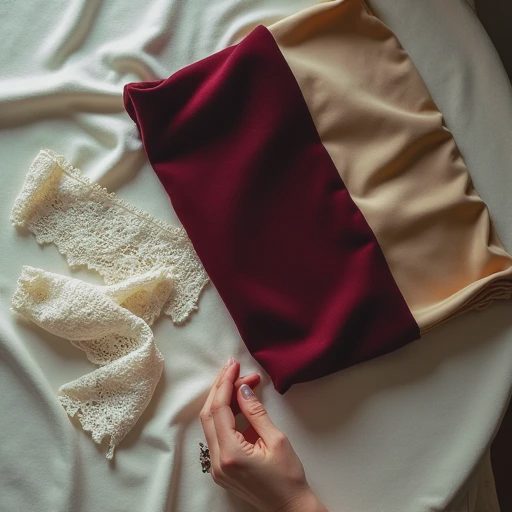
Romantic lace is almost always a small dose. A lace trim at a collar or cuff. A lace panel inset into a blouse. A lace overlay that is lined in silk, so the texture reads without exposing everything underneath. Costume lace is wall-to-wall — a full lace dress, a lace bodysuit, a lace skirt with nothing beneath it. It's too much. It reads as lingerie or wedding dress or period film extra, and rarely anything in between.
My rule: if the lace is the main event, leave it. If the lace is a detail — something you notice on second glance — it's probably wearable. The most romantic lace in my wardrobe is a simple ivory slip with a half-inch lace trim at the hem. No one sees it but me, and that privacy is part of its romance.
Velvet.
Velvet is tactile, light-absorbing, and deeply romantic — in the right weight and the right piece. A heavy velvet opera coat is magnificent, but I live in Brooklyn, not 1890s Vienna. I've learned to look for velvet in small, wearable forms: a slim velvet blazer, a pair of velvet flats, a simple velvet shell that layers under a cardigan or a trench. Crushed velvet reads more bohemian and less costume than panne velvet with a high shine. Matte velvet reads more modern than glossy.
My rule: velvet should serve the outfit, not swallow it. If the piece is entirely velvet and entirely dramatic — a floor-length velvet gown, a velvet cape — ask yourself honestly when you will wear it. If a specific occasion comes to mind immediately, it might be worth it. If you're inventing a fantasy occasion to justify the purchase, put it back.
Satin.
The problem with satin in a thrift shop is that much of it is cheap polyester pretending to be silk. That kind of satin has a high, glassy shine and a stiff hand — it reflects light harshly and shows every seam, every wrinkle, every drop of moisture. Romantic silk satin, by contrast, has a soft, creamy luster. It doesn't shout "look at me." It catches light gently and releases it.
My rule: turn the satin piece inside out. Look at the seams. Look at the label. If it's silk, or a high-quality rayon, the drape and the hand will tell you. If it's polyester and it gleams like a gift ribbon, it will look like a costume piece the moment you step into daylight. Silk whispers. Polyester satin announces.
The Accessories Test: One Romantic Piece Per Outfit
Here is a practical editing tool I use when I'm thrifting romantic accessories or accent pieces: one romantic gesture per outfit is enough.
A lace-trimmed blouse with a velvet skirt and satin shoes and a beaded bag is not an outfit — it's a theater production. The eye doesn't know where to land. The woman disappears into the accumulation.
A lace-trimmed blouse with simple wool trousers and flat leather boots, on the other hand, reads as intentional. The lace becomes a detail rather than a declaration. The romance is present but balanced by something grounded. That tension — between soft and structured, romantic and restrained — is where wearable vintage romance actually lives.
When I'm thrifting, I now shop with this balance in mind. If I pick up a deeply romantic piece — a ruffled silk blouse, an embroidered velvet jacket — I immediately think about what grounded piece in my existing wardrobe will anchor it. If I can think of at least three real outfits that already exist in my closet, the piece comes home. If I would need to build an entirely new wardrobe around it, it stays behind.
The Final Check: Whose Romance Is This?
The last question I ask before buying a romantic vintage piece isn't about the garment at all. It's about the story it's telling.
Costume pieces are telling someone else's story — a Victorian heroine, a 1950s starlet, a fantasy character from a film that hasn't been made yet. They come with a narrative already attached, and the woman wearing them has to play a part.
Wearable romantic pieces, by contrast, are open to your narrative. They don't come with a script. A bias-cut silk skirt from the 1940s doesn't demand you play Rosalind Russell. It just asks you to be a woman who appreciates the way silk moves when she walks. It makes room for your life — your subway commute, your coffee order, your conversation, your quiet evening at home.
The most romantic vintage I own doesn't look romantic on the hanger. It looks like a simple navy dress or a charcoal skirt or a cream blouse with sleeves that drape just so. The romance is in the wearing — the way the fabric catches light when I lean forward, the way the hem sways when I turn a corner, the way I feel more like myself in it than I did without it. That is romance. Not the costume, not the performance. The quiet, collected, deeply personal feeling of wearing something that understands you.
Style should feel collected, not crowded. Romantic vintage style, when it works, is a handful of pieces that soften the edges of real life without turning it into theater. Fabric that moves. Silhouettes that follow. Lace as a detail, not a plot point. One romantic gesture at a time. And the confidence to leave the costume on the rack, no matter how beautifully it whispers from across the shop.
No letters yet — be the first to write.