
There’s something quietly magnetic about 1940s fashion. It’s not flashy or fussy, but when a woman walks by in a tailored jacket with padded shoulders and a nipped waist, you notice. I’ve spent years digging through thrift bins and studying old film stills, and I keep coming back to this decade because it offers something rare: a wardrobe built on structure and restraint. 1940s fashion isn’t about showing off—it’s about showing up with presence. And honestly, that kind of confidence never goes out of style.
When you dress in the spirit of the 1940s, you’re borrowing from a time when clothes were made to last. Fabric was rationed, so every seam had to count. That’s why the silhouettes are so deliberate—the strong shoulder, the small waist, the skirt that falls just below the knee. It’s a look that flatters without trying too hard. And the best part? You can find pieces that channel this era without looking like you’re headed to a costume party. Let’s talk about how to make 1940s fashion feel like your own.
The Defining Silhouette of 1940s Fashion
The first thing to understand about 1940s fashion is the silhouette: broad shoulders, a cinched waist, and a hemline that hits around mid-calf. It’s a shape that creates an hourglass without relying on tightness. Think of Katherine Hepburn in *The Philadelphia Story* or the way Joan Crawford carried herself in those sharp suits. The padded shoulder gave women a sense of authority—a visual way to occupy space. And the nipped waist? That’s pure elegance. If you’re thrifting, look for blazers or dresses with structured shoulders and a defined waist. Even a simple A-line skirt worn with a tucked-in blouse can capture that same line.
What I love about this silhouette is how it translates to modern life. Pair a vintage-inspired blazer with high-waisted trousers and loafers, and you’ve got a look that works for a gallery opening or a coffee run. The key is proportion. 1940s fashion is all about balance: if you go broad on top, keep the bottom tapered; if you go full on bottom (a fuller skirt), keep the top simple. That’s the unspoken rule of the era, and it still holds today.

Key Pieces to Look for When Thrifting 1940s-Inspired Items
If you want to build a wardrobe rooted in 1940s fashion, start with the essentials. A tailored blazer with strong shoulders is your anchor piece. Look for wool or heavy crepe—fabrics that hold their shape. Next, a midi skirt with an A-line cut. The slight fullness at the hem creates movement without being bulky. And don’t overlook the blouse: a simple silk or cotton blouse with a modest neckline and maybe a small ruffle or bow detail. These three pieces alone can create dozens of outfits.
When I’m at a thrift store, I check the shoulders first. If the padding is gone but the structure is there, a tailor can fix it. Also look for metal zippers—they’re a telltale sign of vintage quality. And check the fabric content: rayon and wool are common in authentic 1940s clothing, but even modern interpretations in good fabrics are worth grabbing. The goal isn’t to dress in head-to-toe vintage; it’s to add pieces that carry the spirit of 1940s fashion into your everyday life.
How to Wear 1940s Fashion in Modern City Life
One of the reasons 1940s fashion works so well today is that it’s inherently practical. The skirts allow you to move, the blazers give you pockets, and the overall structure means you don’t have to fuss. Living in Brooklyn, I wear a lot of vintage-inspired outfits for subway trips, library afternoons, and casual dates. A typical look might be a cream silk blouse tucked into a high-waisted denim A-line skirt, with a wool blazer thrown over. Low block heels or loafers finish the outfit. It feels put-together but not precious.
The secret to avoiding the costume effect is to mix eras. Pair a 1940s-inspired skirt with a modern knit sweater, or wear a vintage blazer with jeans and a plain tee. That’s how you keep the silhouette without looking like you stepped out of a time capsule. 1940s fashion gives you a beautiful foundation—strong lines and elegant shapes—but it’s your styling that makes it personal.
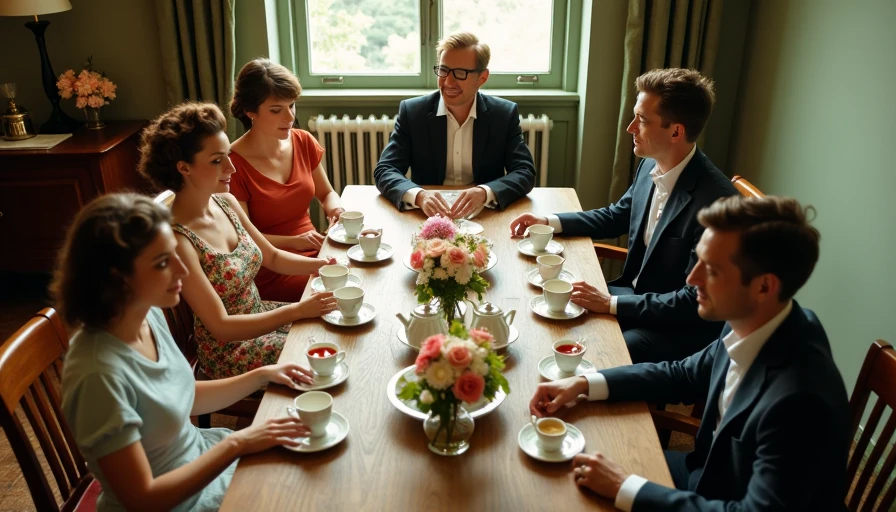
The Beauty of Restraint: Why 1940s Dressing Feels So Elegant
There’s a reason why 1940s fashion still shows up on runways and in editorials. It’s not about trend cycles; it’s about the quiet power of restraint. In a world of fast fashion and constant novelty, the 1940s approach to dressing feels refreshingly deliberate. Every piece was chosen with intention. The colors were muted—olive, navy, burgundy, cream—because bright dyes were scarce. The embellishment was minimal because resources were limited. But that restraint created an aesthetic that feels both grounded and graceful.
I think that’s the lesson I keep coming back to: style should feel collected, not crowded. 1940s fashion teaches us to invest in a few excellent pieces and wear them with pride. It’s a standard that translates beautifully to modern wardrobes. So next time you’re tempted by a cheap fast-fashion trend, remember the power of a well-cut blazer and a tidy hem. Sometimes the most stylish thing you can do is choose less, but choose well.


No letters yet — be the first to write.